

I remember my first time walking into the Canton Fair—it felt like I’d stepped into a maze the size of a small city. Within the first hour, I had five tote bags, a stack of business cards, and zero idea if any of it would lead to a real deal.
I even spent an entire afternoon talking to a supplier, only to find out later they were just a trading company pretending to be a factory.
That trip cost me time, energy, and almost a $10,000 deposit I thankfully never sent.
Since then, I’ve returned several times and learned how to spot real manufacturers. I’ve also helped clients across logistics, agriculture, and manufacturing do the same. Everything in this article is based on firsthand experience, not fluff.
This guide will show you exactly how to plan, attend, and follow up like a pro—so you don’t waste time or money. From preparation to negotiation, I’ll cover everything you’re looking for.
Let’s break it down!
1. Register & Get Official Invitations Early
Let me tell you, nothing slows down a Canton Fair trip like visa delays or registration issues. I learned that the hard way.
Back in my first year attending, I didn’t realize how far in advance I needed to apply. I thought showing up with my passport and business card was enough. It wasn’t. My visa almost didn’t get approved in time, and I had to rush every step of the trip, flights, hotel, even supplier meetings.
That kind of stress? You don’t need it. Here’s how to do it right the first time:
Register Online
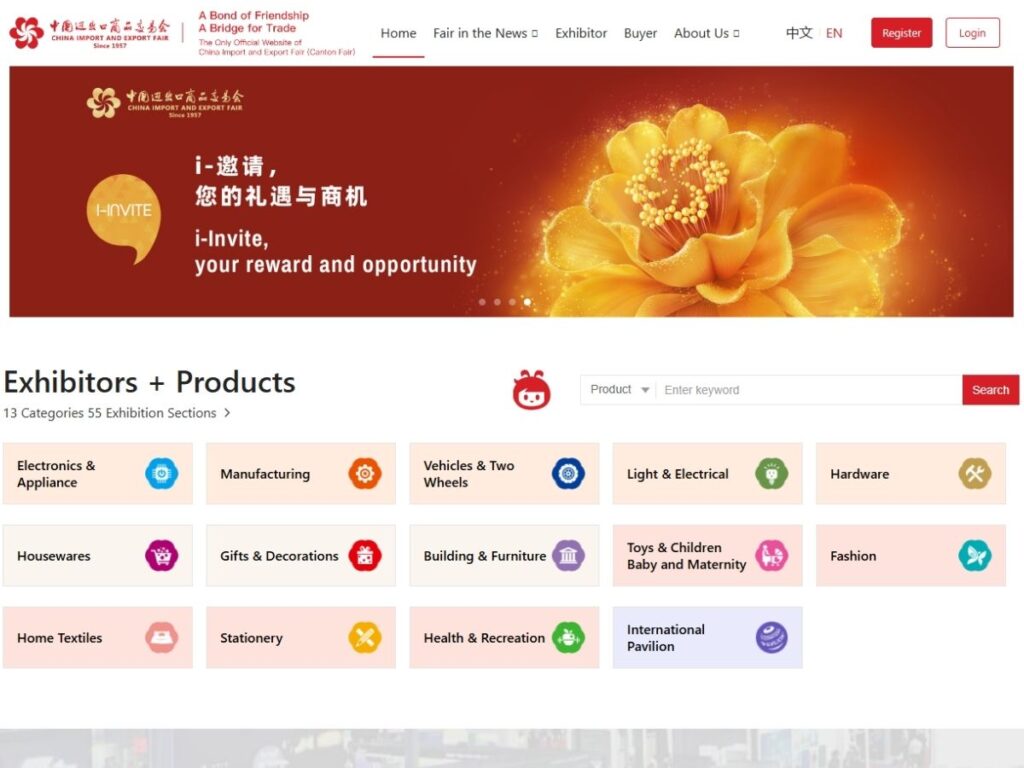
Head over to the official Canton Fair website: https://www.cantonfair.org.cn/en-US
Create a Buyer account if you don’t already have one. Once logged in, you’ll be able to manage your invitations, registration info, and eventually get access to their digital fair tools.
Apply for Your Invitation Letter
This is important, you need an official invitation to apply for a business (M) visa to China.
Once your buyer account is set up, request your invitation online. It usually gets processed quickly, but don’t wait too long, Chinese consulates can get backed up before the fair.
If you’re sending a team, each person attending will need their invitation.
Check the Dates and Phases
The Canton Fair is held in 3 phases, depending on your industry.
Spring 2025 Dates (Tentative): Phase 1: April 15–19: Electronics, Machinery, Industrial Equipment Phase 2: April 23–27: Consumer Goods, Home Products Phase 3: May 1–5: Textiles, Food, Agriculture, Medical
Most industries like construction, mining, energy, and logistics will want to attend Phase 1. Knowing the phase you need is crucial, you don’t want to fly across the world only to find the products you care about were in a different week.
Pre-Register for Your Entry Badge
Once approved, you’ll be able to download a Pre-Registration Confirmation, which lets you pick up your badge on-site without delay. Bring:
- Your passport
- A printed copy of the confirmation
- Business license or proof of company (if required)
You’ll need this badge every day you enter the fair.
2. Plan Flights, Hotels, and Local Transport
You can do everything else right, your registration, sourcing list, supplier research, but if your travel plan is a mess, it’ll throw off your whole fair experience. I’ve seen business owners miss meetings, show up late to halls, or burn out by day two simply because they didn’t plan the basics.
I was one of them once. I stayed at a hotel 45 minutes away from the venue to save money. Those savings quickly disappeared in daily cab fares and time wasted in traffic.
Trust me, how you plan your travel makes or breaks your Canton Fair game plan. Let’s get yours set up the right way:
Book Your Flight Early
Guangzhou Baiyun International Airport (CAN) is the main airport serving the city. It’s modern, well-connected, and handles international and domestic flights daily.
Here’s what you should know:
- Book your flight at least 6–8 weeks in advance, especially for Phase 1. That’s the busiest week for B2B buyers.
- If you’re coming from overseas, consider landing a day early. Customs, jet lag, and traffic delays are real.
- Stick with direct flights if you can. Missing a layover connection in another country can wreck your arrival window.
If you’re attending multiple phases or plan to visit factories around China after the fair, consider booking multi-city flights or open-jaw tickets (arrive in Guangzhou, depart from Shanghai or Shenzhen).
Choose the Right Hotel
This is where most first-timers slip up. You want a hotel that balances comfort, convenience, and access, not just a low nightly rate. Here’s what works best:
- Stay near the Canton Fair Complex (Pazhou area), ideally within walking distance or on a hotel shuttle route.
- Top areas to consider:
- Pazhou: Best for walking to the venue.
- Haizhu District: Good balance between comfort and price.
- Tianhe District: More upscale, with great restaurants and business centers.
Look for hotels that offer:
- Free shuttle buses to the fair
- Breakfast included (you’ll need the energy)
- Business services or concierge (for help with printing, directions, etc.)
Getting Around Guangzhou
Guangzhou is a big city, but it’s built for business travel. Still, you’ll want a plan to move efficiently between your hotel, the fairgrounds, and supplier meetings. Here’s how:
Subway (Metro)
- The Guangzhou Metro is fast, clean, and affordable.
- Pazhou Station on Line 8 drops you directly at the Canton Fair Complex.
- Buy a transit card at the station (or ask your hotel concierge).
Taxi / Ride Apps
- Use DiDi Chuxing (China’s Uber).
- Install the app before you leave your home country and set up payment in advance.
- Always have your destination name written in Chinese, many drivers don’t speak English.
Hotel Shuttle
- Many Canton Fair partner hotels offer free shuttle buses to and from the venue.
- These leave on a fixed schedule, ask for the timetable at check-in.

3. Essential Tools to Bring
Let me tell you, you do not want to show up to the Canton Fair unprepared.
The first time I attended, I forgot a power bank. Halfway through day one, my phone died—no maps, no supplier contacts, no translator app. I had to borrow a charger from a supplier just to get directions back to my hotel. It sounds small, but in that moment, it was a big deal.
And that’s just one example. You’re going to be walking miles each day, talking to dozens of vendors, snapping photos, and taking notes. If you’re not equipped, you’re losing time and leaving deals on the table.
Let’s fix that:
Business-Ready Essentials
You’re not a tourist. You’re there to do business. Here’s what you absolutely need:
- Business Cards: Bring 200+ cards with your name, company name, contact details, and one side in Chinese if possible. Suppliers will ask for this in nearly every conversation.
- Notebook + Pens: Yes, digital is great—but nothing beats quick handwritten notes, especially when you’re comparing suppliers back-to-back.
- Clipboard or Folder: You’ll collect brochures, samples, product spec sheets. Keep them organized.
- Rolling bag or Backpack: You’ll be picking up a lot of materials, catalogs, maybe even small product samples. A backpack is fine. A rolling carry-on? Even better.
Tech to Have
You’ll be relying on your phone or tablet more than you think. Be ready.
- Phone with Roaming or Chinese SIM: Make sure you have access to data and maps without relying on hotel Wi-Fi.
- Power Bank: The fair is all-day, and there aren’t many outlets around. Get a high-capacity charger that lasts the whole day.
- Portable Wi-Fi (optional): Helpful if you’re traveling with a team and want to stay connected on multiple devices.
- Universal Plug Adapter: China uses Type A, C, and I plug types. Bring one that works for all your gear.
Apps to Install
Don’t wait until you’re standing in line at customs to download these.
- Canton Fair Official App: Floor maps, exhibitor search, and your entry pass if using e-badge.
- Youdao or Google Translate: For real-time translation in supplier conversations. Test it before you go.
- DiDi Chuxing: The Uber of China. Use it for reliable and affordable local transport.
- WeChat: This is how business gets done in China. Suppliers will ask for your WeChat QR code almost immediately. Set up your profile in advance.
Bonus Items
- Comfortable walking shoes
- Reusable water bottle
- Snacks
- Hand sanitizer and tissues
4. Prepare a Sourcing Game Plan
Here’s something I learned the hard way: walking into the Canton Fair without a clear plan is the fastest way to burn through your time and your energy, without getting results.
I’ve done it. I walked into Hall 9.2 with nothing but a rough idea of what I wanted. By the end of the day, I had 40 catalogs, 22 business cards, and no real leads I could act on.
Don’t make that mistake.
You’re not going to the fair to “see what’s out there.” You’re going with a purpose. Here’s how to make sure your sourcing game plan is tight before you even get on the plane:
Start With Your Product Goals
What exactly are you sourcing and why?
Before anything else, sit down and define your objectives. Not just “I want to find a new supplier,” but specifics like:
- What product(s) are you looking for?
- What specs or features are non-negotiable?
- What’s your ideal price range?
- What volume are you planning to order?
This isn’t just helpful for you—it helps filter out the suppliers who can’t meet your needs, so you don’t waste time.
Set Clear Qualification Criteria
Not all suppliers are created equal. You’ll meet factories, trading companies, and everything in between. Go in knowing what matters most for your business. Some examples of filters to define before the fair:
- Factory or trading company? (Ask directly.)
- ISO, CE, or other certifications required?
- Export history to your country?
- Minimum order quantity (MOQ)?
- Lead time?
- Payment terms?
Create a checklist, print a few copies, and use it to qualify vendors on the spot. It’ll keep you sharp and save hours of confusion later.
Use the Exhibitor Directory
The Canton Fair website lets you search exhibitors by category, product, or keyword. Use this feature.
Pick the right phase based on your industry, then narrow your list:
- Highlight the top 20–30 suppliers you want to visit
- Write down booth numbers and locations
- Group them by hall so you can tackle them efficiently
Create a Day-by-Day Plan
You’re going to need structure to stay efficient.
- Focus each day on one hall or one product type
- Build in time for walking between halls (the fair is massive)
- Leave some space for spontaneous finds or follow-up visits
Bring your sourcing checklist, a map, and notes from your pre-fair research. Treat each supplier’s conversation like a micro-interview, and log every detail.
Know the Questions to Ask
Most buyers don’t dig deep enough. That’s where deals fall apart later. Here are a few must-ask questions:
- Are you a factory or a trading company? Can I visit your facility?
- What’s your MOQ? What’s the lead time for production?
- Do you offer samples? If yes, are they free or paid?
- What certifications do you have?
- What’s your typical payment structure for new clients?
5. Navigating the Fairgrounds Efficiently
The Canton Fair is massive. If you’ve never been, it’s hard to explain just how big it is.
Picture 50+ exhibition halls, each the size of a warehouse. Thousands of booths. 10, 000 of buyers. If you don’t have a plan for how to move through it, you’ll burn through your time—and your feet—before lunch.
On my second visit, I thought I could “just follow the signs.” That lasted about 30 minutes. I spent most of the day bouncing between unrelated halls, chasing booth numbers out of order.
Here’s how to avoid that and move like a pro inside the fairgrounds:
Understand the Layout
The Canton Fair takes place at the China Import and Export Fair Complex in Pazhou, Guangzhou. It’s split into three main areas: Area A, B, and C, each with multiple halls on multiple floors.
Each product category is grouped by area and hall:
- Area A: Industrial products, machinery, electronics
- Area B: Household goods, gifts, furniture
- Area C: Textiles, food, medical products
Once you know your target products, check which halls they’re located in. The fair’s official website and mobile app offer updated maps and exhibitor lists. Print or save these in advance.
Map Out Your Route
Here’s what works:
- Use the Canton Fair app to search by booth number or product category
- Mark the locations of priority suppliers
- Group visits by hall and floor to minimize backtracking
- Give yourself a physical path to follow, hall by hall
I usually plan each day around a single zone. It saves time, keeps energy up, and helps you stay focused on one product category at a time.
Give Yourself Enough Time
Some buyers spend 20+ minutes at every booth. That’s a mistake.
Not every booth deserves your full attention. Some won’t meet your MOQ. Others won’t be a fit for your region. That’s okay, qualify fast and move on. Here’s a solid rhythm:
- 3–5 minutes to scan and ask basic questions
- 10–15 minutes if they meet your criteria and you want to dig deeper
- Take notes right away, booth numbers, contact names, product highlights
Bring a checklist or use your phone to record supplier details as you go.
Use Rest Zones
You’ll need breaks, mentally and physically.
- Every hall has rest areas and cafes. Use them to recharge and review your notes.
- Business centers can help you print documents or get access to Wi-Fi.
- Don’t wait until you’re exhausted to take a break. A quick recharge every 90 minutes keeps you sharp.
6. Top Trends to Watch in 2025
One of the biggest advantages of attending the Canton Fair isn’t just sourcing—it’s spotting what’s next.
Every time I go, I walk away with more contacts and catalogs. I come back with market insights. If you pay attention, you’ll catch those signals too. And in 2025, there are some very clear trends shaping the future across key industries.
Here’s what to keep an eye on while you’re walking the halls:
Smart Manufacturing & Automation
Whether you’re in construction, mining, logistics, or energy, automation is everywhere this year. What to look for:
- Factory machinery with integrated sensors and data tracking
- Smart control systems that reduce manual oversight
- AI-powered inspection or assembly tools
Ask suppliers if they offer “smart” upgrades or connectivity features. Many will showcase live demos—take time to watch. You’ll get a better feel for what the future of your supply chain might look like.
Sustainability as a Standard
“Green” isn’t just a marketing word anymore—it’s becoming a requirement. You’ll see it across industries:
- Eco-friendly materials in construction and packaging
- Energy-efficient motors, solar-powered tools, and low-emission machines
- Compostable packaging and biodegradable products in consumer goods
More international buyers are asking about environmental impact, and manufacturers are responding. Don’t just browse—ask suppliers what steps they’ve taken. If they can’t answer clearly, that’s a red flag.
Customization & Private Label Growth
In 2025, flexibility is power. More suppliers now offer:
- Small batch runs
- Custom branding and packaging
- Faster turnaround for sample customization
If you’re sourcing for retail, distribution, or resale, this is huge. Ask suppliers: “Do you offer OEM/ODM services?” and “What’s the MOQ for custom orders?”
You’ll find plenty of booths showcasing packaging mockups and branding examples. These are worth a second look.
Digital-First Supplier Experience
Even traditional manufacturers are going digital. What this means to you:
- QR codes that link directly to product specs or pricing sheets
- Suppliers offering virtual factory tours via tablet or screen
- Integration with platforms like Alibaba, Global Sources, or even private portals for repeat orders
This is a great indicator of professionalism. A supplier who’s investing in their digital experience is often more structured behind the scenes.
7. 4 Insider Tips from Industry Pros
Every time I go to the Canton Fair, I notice a clear split. Buyers are wandering, hoping they stumble across a good supplier. And then there are the pros—moving with intention, locking in factory visits, and walking out with actual results.
So I started asking questions. Over the years, I’ve gathered tips from sourcing agents, import/export managers, and industry veterans who treat the fair like a business mission, not a shopping trip.
Here are some of the best insider strategies I’ve learned—and used myself:
#1 Schedule Factory Visits
If you find a supplier you like, don’t wait until you get home to follow up. Ask right there at the booth:
“Can I visit your factory after the fair?”
Most legit manufacturers will say yes, and some will even arrange transportation. If you’re placing a large order or want to verify production capability, this is a must.
#2 Use the Supplier Lounge
Each phase has designated supplier meeting zones or lounges.
If you’re having a good conversation at a booth but need quiet time to go over pricing, contracts, or samples, ask to move there. It shows you’re serious—and gives both sides time to focus.
#3 Have a Follow-Up Plan
One of the most common regrets I hear? “I met great suppliers but didn’t follow up fast enough.”
Before you leave Guangzhou:
- Mark your A-list suppliers
- Take photos of their products, booths, and business cards
- Draft follow-up emails while it’s fresh—don’t wait until you’re back and buried in work
Even better? Schedule a follow-up call or Zoom before you leave the booth. It locks them in.
#4 Watch the Smaller Booths
Everyone flocks to the giant displays, but sometimes the real gems are in the 2×2 meter booths tucked in the back rows. These smaller suppliers may have:
- Lower MOQs
- Faster lead times
- More room to negotiate
They’re often newer or looking to break into foreign markets, which gives you leverage—if their quality holds up.
Conclusion
That first trip to Canton Fair? I left tired, scattered, and empty-handed. But now, I walk out with real results—suppliers I trust, deals I close, and insights I act on.
This guide covered the what, where, when, how, and why. From registration to supplier follow-ups, you now have the full map.
You’ve got the tools. You’ve got the strategy. Now it’s time to move.
Contact us today and let’s make your next Canton Fair your most successful one yet.
Recommended Reads for You
If you’re looking for more insights, we’ve put together a list of helpful articles that you might enjoy:
Still haven’t found what you’re looking for? Don’t hesitate to contact us. We’re available around the clock to assist you.