

Transportation doesn’t leave much room for mistakes. I learned that the hard way.
A client was moving liquid fertilizer. The trailer looked fine—but it was made for food-grade liquids. We didn’t catch it. Customs did.
The entire load was flagged. Rejected. The buyer backed out of the contract. That one decision cost thousands.
Since then, I’ve paid close attention to the differences between tanker trailers—and made it my job to help others do the same.
If you’re hauling fuel, chemicals, food liquids, or bulk materials, you need to know which trailer matches your cargo—and why.
In this guide, you’ll learn the differences between 7 types of tanker trailers. We’ll break down capacity, structure, and safety features for each one.
By the end, you’ll be able to choose the right trailer with confidence—without risking your load, your time, or your money.
So let’s get started!
Quick Comparison Table
Before diving deeper into each type of tanker trailer, here’s a quick side-by-side comparison. It gives you a fast overview of how they differ in purpose, build, and features.
| Trailer Type | Common Cargo | Capacity Range | Material | Loading System | Common Users |
| Fuel Tanker | Gasoline, diesel, aviation fuel | 30,000–45,000 liters | Aluminum, stainless steel | Bottom loading with vapor return | Fuel stations, oil distributors, fleets |
| Chemical Tanker | Acids, solvents, hazardous liquids | 25,000–35,000 liters | Stainless steel with chemical lining | Pressure or pump discharge | Chemical companies, mining, industry |
| Food-Grade Tanker | Milk, juice, edible oils, wine | 25,000–35,000 liters | Polished stainless steel | Sanitary pumps, CIP-ready valves | Dairy, food processors, exporters |
| Dry Bulk Tanker | Cement, lime, flour, plastic pellets | 40–70 cubic meters | Aluminum or carbon steel | Pneumatic discharge (compressed air) | Cement plants, grain mills, plastics |
| Gas Tanker (LPG/LNG) | Propane, butane, liquefied natural gas | 20,000–25,000 liters | Insulated carbon steel | Pressure loading with vapor return | Gas distributors, energy suppliers |
| Crude Oil Tanker | Unrefined petroleum | 30,000–45,000 liters | Heavy-duty carbon steel | Top loading with suction pump | Oil field haulers, energy contractors |
| Bitumen Tanker | Hot asphalt, bitumen, tar | 20,000–40,000 liters | Carbon steel with heat coating | Heated rear discharge | Road contractors, asphalt suppliers |
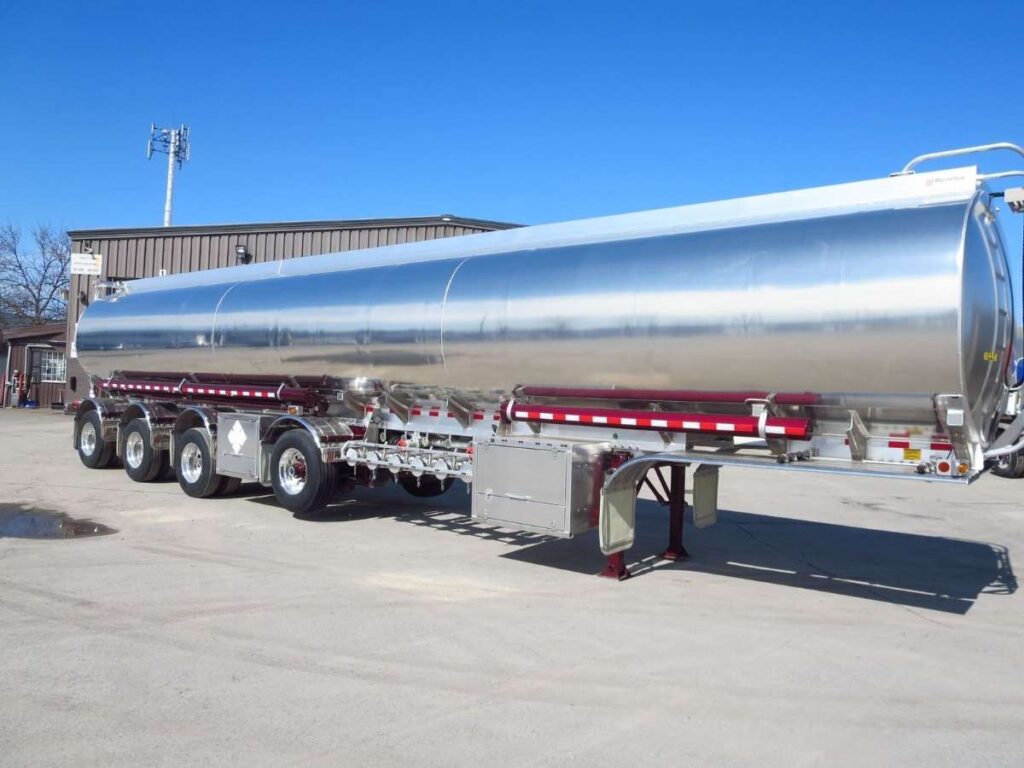
1. Fuel Tanker Trailers
I once gave a fuel hauler the wrong trailer, and it nearly shut down his entire route. On paper, it seemed fine: but the valves didn’t match his bottom-loading system, and unloading turned into a long, costly delay.
At RhinoTrail, we build customized fuel tanker trailers to avoid problems like that. Whether it’s gasoline, diesel, or aviation fuel, trailer choice matters. It affects safety, speed, and how well you follow legal rules. Picking the right one starts with knowing the key features.
Key Features
- Multiple compartments: carry different fuels or split loads safely
- Bottom-loading system: safer, faster, and reduces fuel vapor exposure
- Vapor recovery system: captures harmful fumes during loading and unloading
- Rollover protection: helps prevent spills during accidents
- Capacity: typically between 30,000 and 45,000 liters
- Material: aluminum (lighter and fuel-efficient) or stainless steel (stronger and corrosion-resistant)
Safety and Compliance
- DOT 406: U.S. safety standard
- ADR: used across Europe
- Fire-resistant valves and shut-off systems: help protect against leaks and fires
Maintenance Tips
- Tank cleaning: prevents contamination
- Valve, hose, and gasket checks: avoid leaks and equipment failure
- Emergency system testing: ensures shut-offs and pressure reliefs work when needed
Even small problems can lead to big risks if ignored.
What Is a Fuel Tanker Used For?
Fuel tanker trailers are built to move flammable liquids in bulk. This includes:
- Gasoline
- Diesel
- Aviation fuel
You’ll often find these trailers used by:
- Oil distributors
- Gas station chains
- Aviation fuel suppliers
- Logistics fleets that manage their own fueling systems
Pros and Limitations
Fuel tankers are built for fast loading, safe transport, and the ability to haul different fuel types. But they have limits: they can’t carry food, water, or dry cargo. Drivers must also be trained and certified to handle fuel safely.
2. Chemical Tanker Trailers
I’ll never forget the day a client called in a panic. His trailer had just finished hauling acid, but the tank wasn’t lined for corrosive cargo. The chemical started eating through the welds. What started as a delivery turned into a containment emergency.
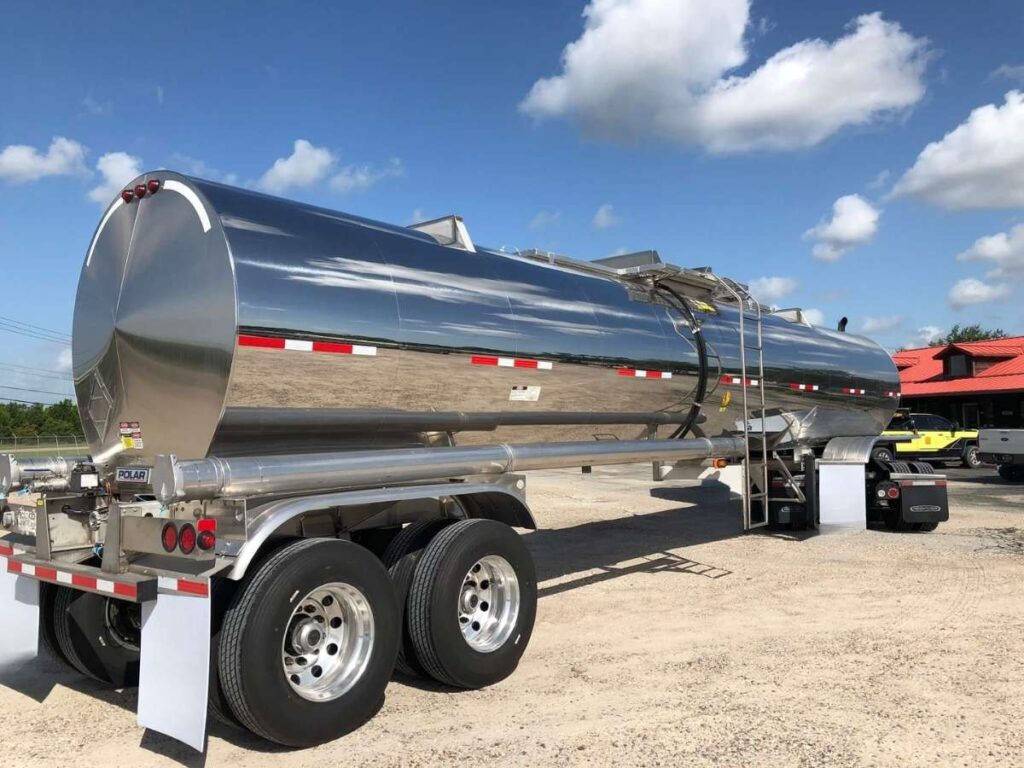
When it comes to chemical tankers, the right design can mean the difference between a smooth job and a serious hazard. These trailers are purpose-built to handle powerful, often dangerous materials.
Key Features
- Single-compartment design: keeps chemical loads stable and reduces cross-contamination
- Reinforced frame: handles added weight and internal pressure from harsh liquids
- Venting system: allows gases to escape safely without releasing fumes
- Capacity: typically holds between 25,000 and 35,000 liters
- Material: stainless steel with chemical-resistant linings such as rubber or epoxy
- Discharge system: pressure unloading or chemical-grade pump discharge systems
Safety and Compliance
- ADR-certified construction: used for cross-border hazardous material transport
- Chemical-resistant interior linings: prevent damage from corrosive cargo
- Emergency pressure relief valves: reduce explosion risk during loading or travel
Maintenance Tips
- Residue cleaning: must be done after every load to avoid dangerous reactions
- Corrosion checks: especially around welds, valves, and vent lines
- Lining inspections: look for blistering, peeling, or cracking
What Is a Chemical Tanker Used For?
Chemical tankers are designed for specific, often hazardous liquids. These include:
- Acids (like sulfuric or hydrochloric)
- Solvents
- Industrial chemicals used in mining, manufacturing, or agriculture
Common buyers are:
- Chemical producers
- Mining operations
- Industrial processing plants
- Hazardous waste handlers
Pros and Limitations
Chemical tankers are strong, tightly sealed, and built to handle dangerous liquids safely. Their linings and discharge systems are specialized for tough jobs. But they also cost more to maintain and require trained operators. They’re not meant for food, fuel, or dry cargo—just chemicals, and nothing else.
3. Food-Grade Tanker Trailers
One of my early clients hauled milk with a chemical tanker—and didn’t know the difference. The load picked up a metallic taste. The buyer rejected the whole batch. He lost the contract on the spot.
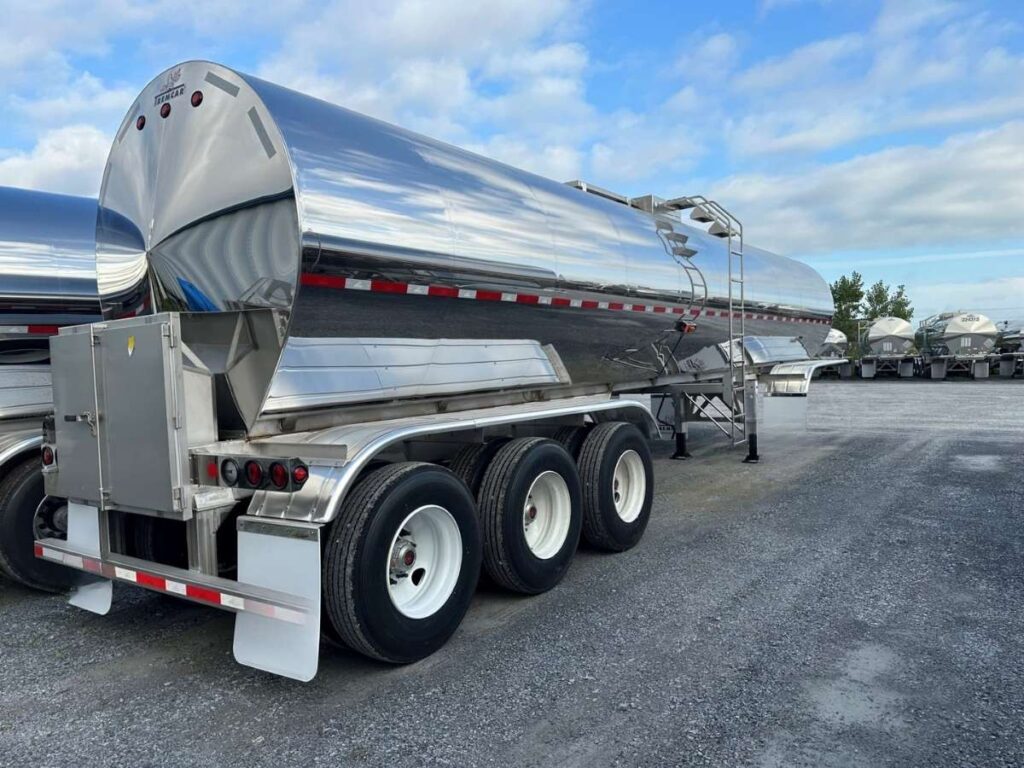
Food-grade tankers are built for one job: moving edible liquids safely and cleanly. At RhinoTrail, we build these tankers with hygiene in mind—from the smooth walls inside to the food-safe welds that keep contamination out.
Key Features
- Polished, smooth internal walls: prevent bacterial buildup and make cleaning easier
- No baffles: keeps liquid pure and avoids trapping residue
- CIP-ready valves: compatible with “clean-in-place” systems for fast sanitizing
- Sanitary discharge pumps: move liquids without exposure to outside air
- Capacity: typically holds between 25,000 and 35,000 liters
- Material: stainless steel with food-grade welding and seamless joints
Safety and Compliance
- FDA-approved materials in the U.S.
- EU food transport standards in Europe
- Sealed, easy-to-clean connections to prevent outside contamination
Maintenance Tips
- Full hygiene cleaning after every trip
- Valve and pump checks to prevent leftover residue
- Cleaning logs and traceability records to meet food safety rules
What Is a Food-Grade Tanker Used For?
- Milk
- Fruit juice
- Wine
- Edible oils
Typical buyers include:
- Dairy companies
- Food processors
- Juice and wine producers
- Edible oil exporters
Pros and Limitations
Food-grade tankers are clean, efficient, and meet strict hygiene standards. They keep edible products safe and fresh during transport. But they’re only for food: you can’t switch between fuel, chemicals, or powders. The cleaning also takes time and skill—but it’s worth it when quality matters.
4. Dry Bulk Tanker Trailers
At one cement yard, the crew had to unload by hand because their pneumatic system failed. Dust filled the air. The job took hours, and tempers ran short. All because the trailer wasn’t built for the material.
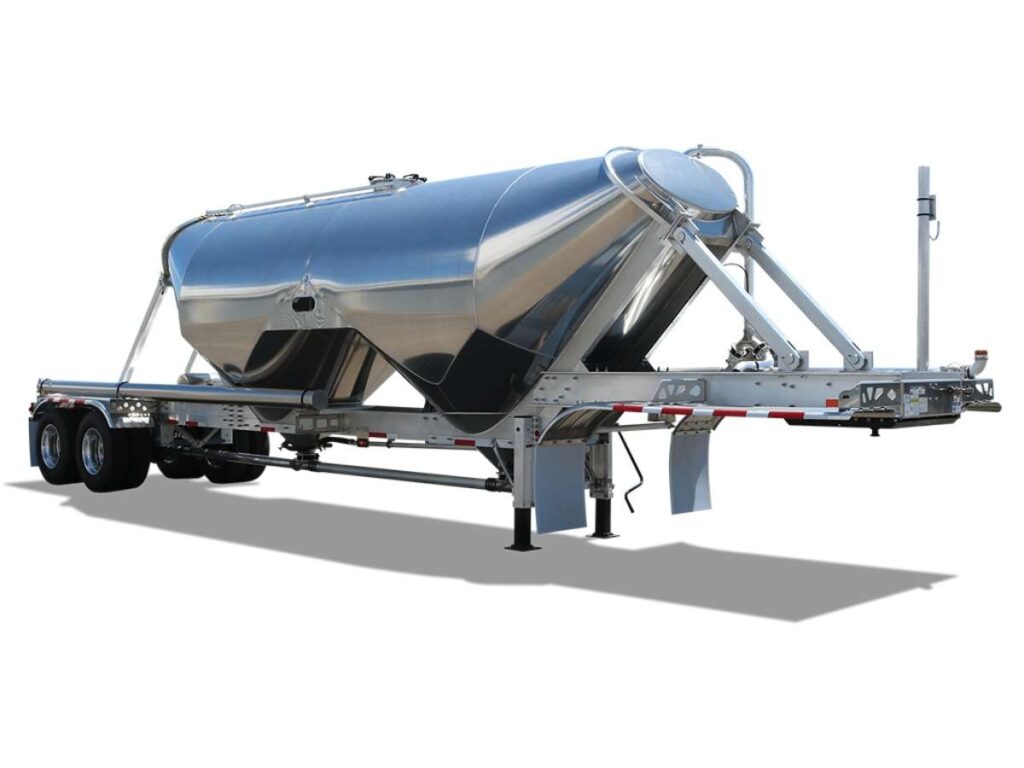
If you’re hauling powders or pellets, you need a trailer that works with pressure, not against it. Dry bulk tanker trailers are made to move fine materials quickly, cleanly, and safely—so you don’t end up stuck with a shovel.
Key Features
- V- or W-shaped hoppers: help your product slide down easily
- Pneumatic discharge system: uses compressed air to push material through sealed pipes
- Dust-tight seals: protect your product and keep the work area clean
- Capacity: usually holds between 40 and 70 cubic meters
- Material: aluminum (lighter and fuel-efficient) or carbon steel (stronger for tough jobs)
Safety and Compliance
- Pressure relief valves: release excess air and prevent damage
- Dust control systems: protect your team and environment during unloading
- Secure access lids: stay closed under pressure and reduce spill risks
Maintenance Tips
- Inspect air seals for leaks that lower pressure
- Check tank walls for cracks or wear
- Flush discharge lines to stop blockages before they happen
What Is a Dry Bulk Tanker Used For?
- Cement
- Lime
- Plastic pellets
- Flour or powdered food ingredients
These trailers are common with:
- Cement and dry mix plants
- Grain and flour suppliers
- Plastic and resin distributors
Pros and Limitations
Dry bulk tankers help you unload faster and protect your cargo from moisture and contamination. They cut down on labor and keep your operation cleaner. But they’re not built for liquids or chemicals. And without a working air system, everything stops.
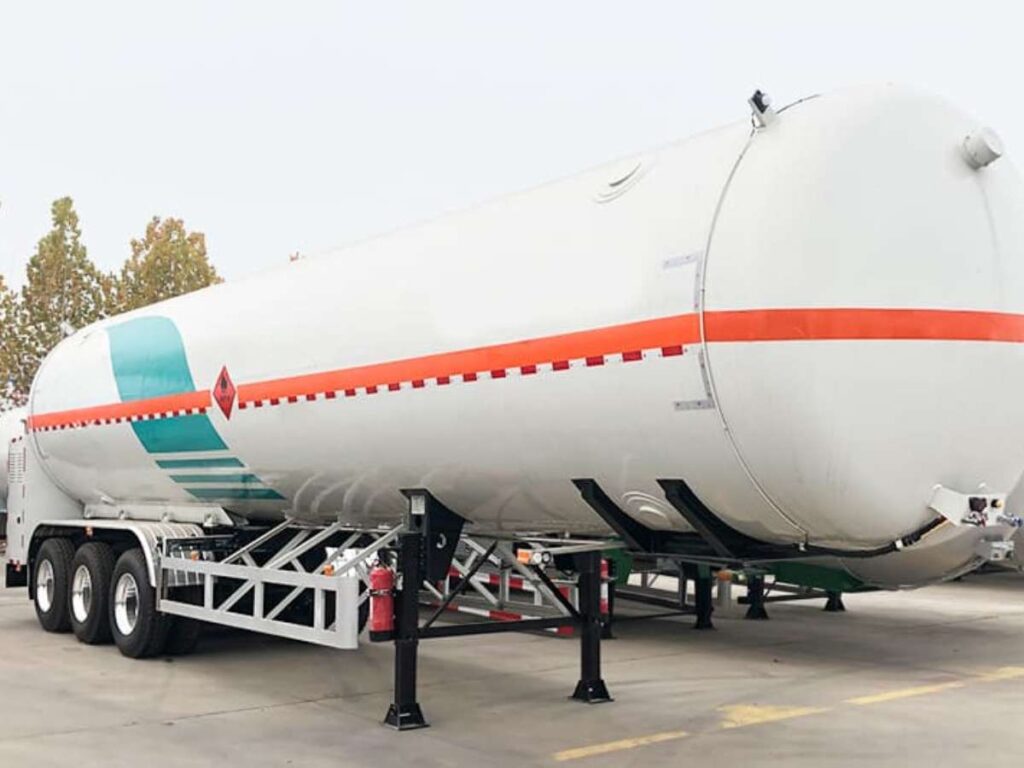
5. Gas Tanker Trailers (LPG/LNG)
During a training visit to a depot, a driver mentioned how one tiny valve leak in his LPG trailer set off a full-scale shutdown. It wasn’t a big spill—but it was gas. That meant alarms, emergency crews, and lost hours.
When you’re hauling liquefied gases like propane, butane, or LNG, even small details matter. These tankers carry high pressure and high risk—so every part of the trailer must be built to handle it.
Key Features
- Rounded pressure vessel design: helps manage internal gas pressure
- High-pressure lines: control the flow of gas during loading and unloading
- Insulated shells: protect temperature-sensitive gases like LNG
- Capacity: typically holds between 20,000 and 25,000 liters for LPG
- Material: high-strength carbon steel, sometimes with extra coatings for insulation and protection
Safety and Compliance
- Pressure relief valves: automatically release gas if internal pressure gets too high
- Thermal protection systems: guard against fire and overheating
- ADR certification: required for transporting hazardous gas across Europe
Maintenance Tips
- Test pressure systems regularly to avoid buildup or failure
- Inspect welds and shell surfaces for wear or corrosion
- Use leak detection tools to check lines, valves, and connectors
What Is a Gas Tanker Used For?
- Liquefied Petroleum Gas (LPG): propane, butane
- Liquefied Natural Gas (LNG)
These loads are common for:
- Gas distributors
- Energy companies
- Chemical and fuel suppliers
Pros and Limitations
Gas tankers are built tough. They keep your product stable under pressure and temperature extremes. They’re vital in energy transport. But they aren’t flexible—you can’t use them for other materials. They also require trained staff, strict handling, and regular inspections.
6. Crude Oil Tanker Trailers
“This thing smells like a refinery,” the driver muttered as he climbed down from the trailer. He had just hauled raw crude from an oil field—and the thick, heavy sludge was still clinging to the walls.
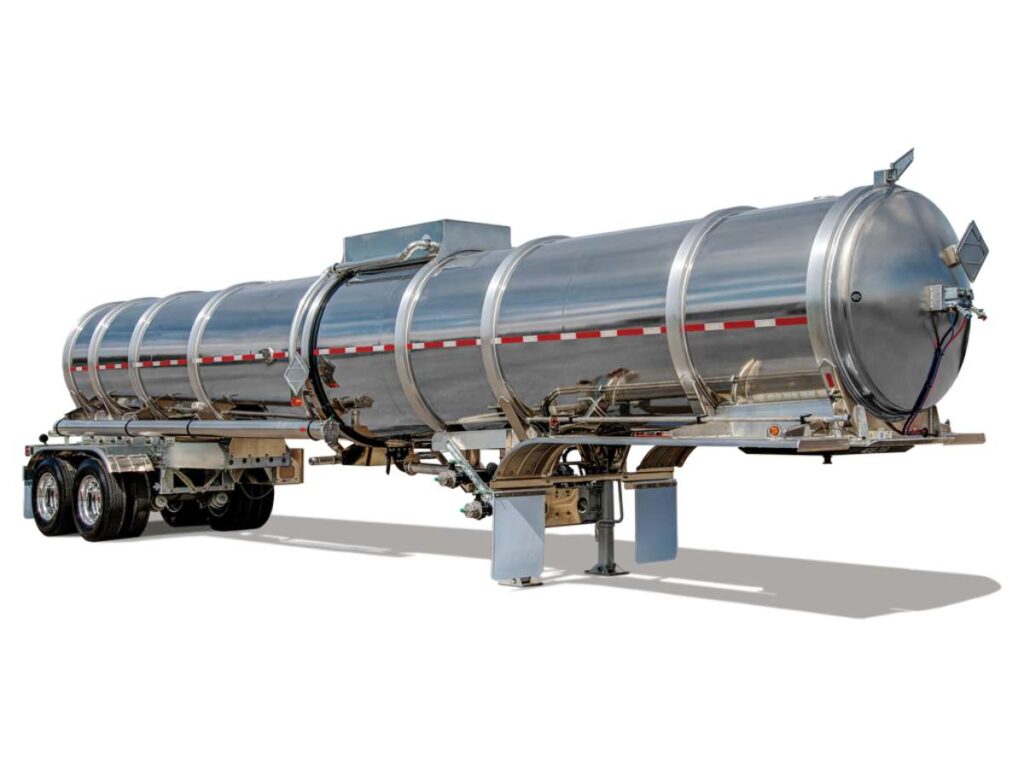
If you’re moving unrefined petroleum, you already know it’s nothing like gasoline or diesel. Crude oil is dense, sticky, and tough on equipment. That’s why crude oil tanker trailers are built stronger, with fewer parts that can fail in the field.
Key Features
- Single-compartment tank: handles large volumes without the need for dividers
- Heavy-duty frame: supports the extra weight and wears from crude loads
- Thicker tank walls: protect against dents and damage from rough terrain
- Capacity: usually ranges from 30,000 to 45,000 liters
- Material: carbon steel, chosen for its strength and resistance to rough use
Safety and Compliance
- Vent systems: release pressure buildup inside the tank
- Anti-spill devices: reduce the risk of leaks during travel
- Sealed manholes and top hatches: stop fumes from escaping
Maintenance Tips
- Remove sludge regularly to keep the tank from clogging
- Inspect the tank walls and frame for corrosion and dents
- Check pumps and hoses for buildup or wear
What Is a Crude Oil Tanker Used For?
You’ll use this trailer if you haul:
- Unrefined petroleum straight from the wellhead
- Field-collected oil waiting to be processed or stored
These are common in:
- Oil fields
- Remote pumping stations
- Energy project sites
Pros and Limitations
Crude oil tankers are tough. They’re built for rough roads, heavy loads, and dirty work. But they’re single-purpose. You can’t use them for refined fuels or other liquids. Cleaning takes time. And because crude is messy, you’ll spend more on maintenance.
7. Bitumen/Asphalt Tanker Trailers
You ever stood near a trailer filled with hot asphalt? The heat waves ripple off the tank, and the smell is thick in the air. That kind of job isn’t easy—but with the right trailer, it’s manageable.
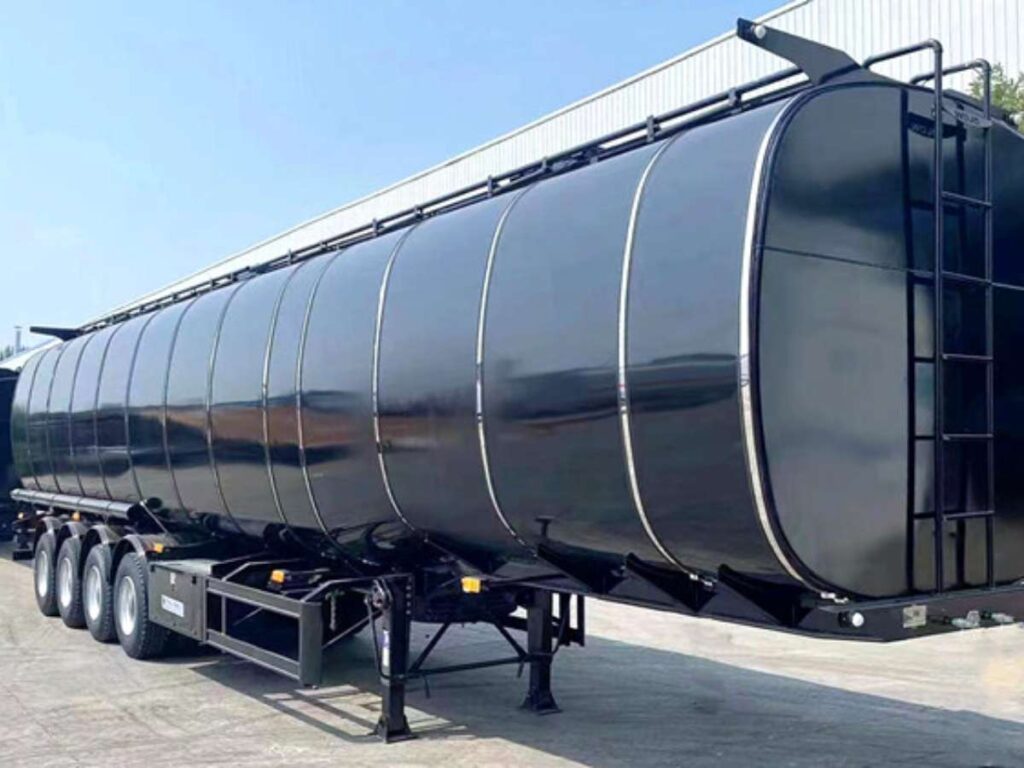
If you haul bitumen, asphalt, or tar, you know these materials don’t just sit quietly. They need heat to stay liquid. That’s why bitumen tankers are built with heat, insulation, and flow in mind.
Key Features
- Insulated cylindrical tank: holds heat and prevents temperature loss
- Rear discharge outlet: easy to connect to paving equipment
- Heated valves and piping: keep product from hardening during flow
- Thermal oil jackets or diesel burners: maintain internal heat during transport
- Electric heating coils: used in some cases for short-range or light-duty work
- Capacity: usually between 20,000 and 40,000 liters
- Material: carbon steel with heat-resistant coating to handle high temperatures
Safety and Compliance
- Temperature gauges: monitor internal heat levels
- Pressure relief valves: protect the tank during heating
- Insulation wraps: reduce heat loss and burn risk
Maintenance Tips
- Check the heating system often for clogs or burner issues
- Clear buildup from valves and discharge pipes
- Inspect insulation for damage or wear
What Is a Bitumen Tanker Used For?
You’ll use this trailer if you haul:
- Hot asphalt for paving
- Bitumen for road sealing
- Tar for roofing or construction
Common buyers include:
- Road construction crews
- Bitumen and asphalt suppliers
- Infrastructure contractors
Pros and Limitations
Bitumen tankers are heat-ready, safe, and perfect for roadwork. They let you deliver hot loads without delays. But they’re specialized. You can’t use them for anything else. The heating systems need fuel and regular care, too.
Conclusion
Every trailer has a job to do. You’ve just seen how each one works—what it carries, how it’s built, and who it’s meant for.
From fuel to food, chemicals to cement—there’s a tanker designed for your material. Choosing wrong can cost you. Choosing the right moves everything forward.
So… what are you hauling? What do you need your trailer to do—today, tomorrow, and the long term?
Don’t wait until something goes wrong.
Contact us today and let’s build the right tanker for your next haul.
Explore More Helpful Resources
Looking for more product options? Take a look at our carefully chosen selections to find what suits your needs best:
For more in-depth knowledge, take a look at these recommended reads. We think you’ll find them useful:
Still haven’t found what you’re looking for? Don’t hesitate to contact us. We’re available around the clock to assist you.